
Why Natural-Looking Filler Results Start With Full Facial Balancing
The Area You Notice Isn't Always the Area to Treat
I have yet to have a patient walk into my practice asking for overdone filler. Everyone wants natural-looking facial restoration. The problem is patients have been led to believe that they are responsible for dictating their treatment plans because this is what was done early in the inception of aesthetic medicine. And, it led to a lot of duck lips, pillow faces, and terrible outcomes.
If you look in the mirror and one thing stands out: a hollow under the eyes, a deepening line beside the mouth, lips that seem thinner than they used to be. It seems like the obvious treatment is to just fill it.
But the area you notice is usually where a change shows up, not where it started.
Filling that one spot in isolation can throw off the entire balance of your face.
That's why I don't do filler without first assessing your whole face. The key to natural-looking results is a multimodal comprehensive treatment plan that addresses all layers of the face and is staged appropriately, more on that below.
In my practice, patients consistently come in complaining about these common four “problem” areas, and many ask to have them filled in isolation. In this article I discuss why I often don’t treat that area, and why you as a patient should be asking for full facial balancing if you want natural-looking results.
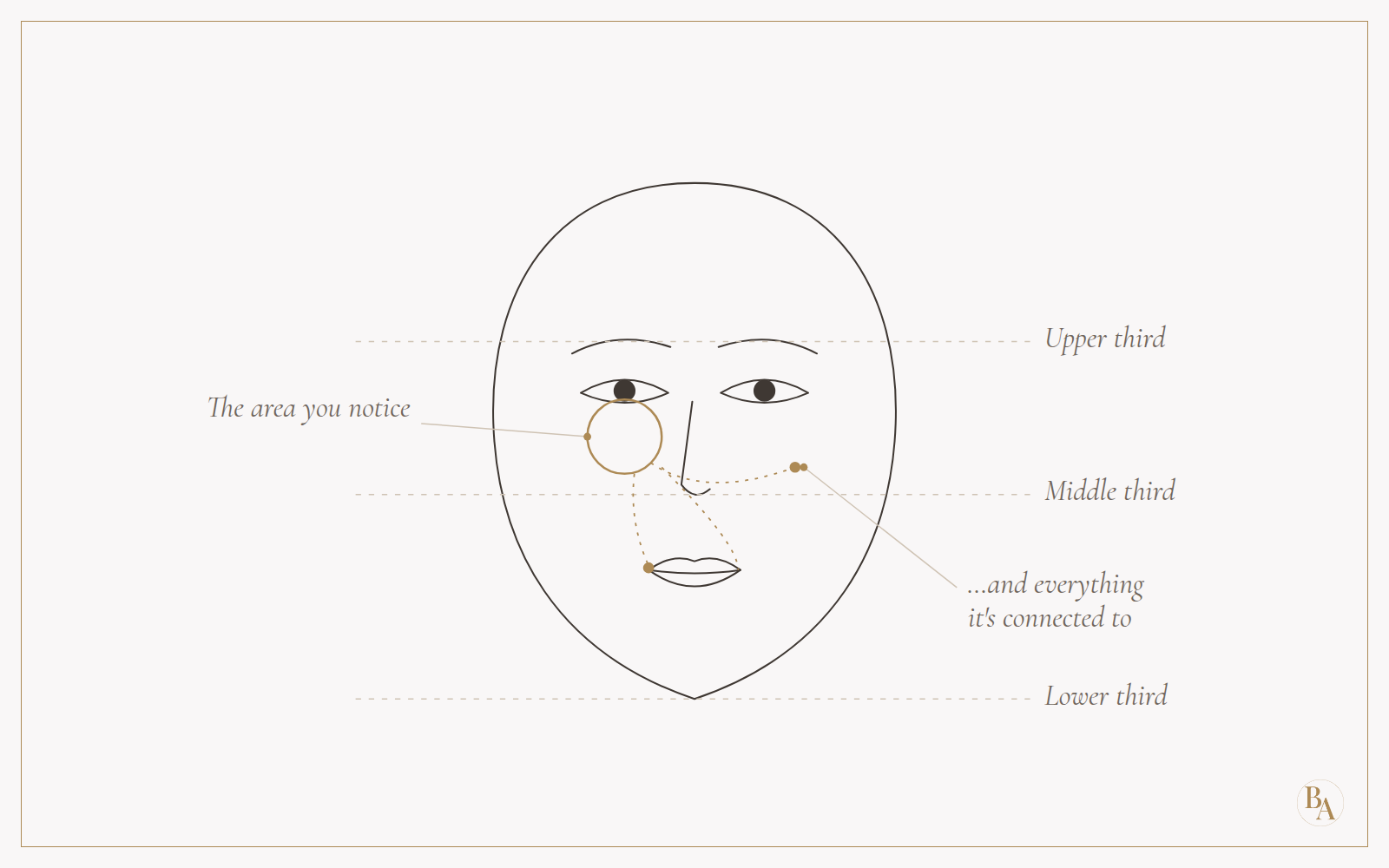
The area you notice is connected to everything around it.
Your Face Ages in Layers, All at Once
Facial aging isn't just occurring in one layer or in one area. It happens across several layers of tissue at the same time:
Skin thins and produces less collagen and elastin, so it holds shape less well.
Muscle changes how it pulls. Some muscles become more active at rest and others lose tone.
Retaining ligaments, the fibrous anchors that tether soft tissue to bone, weaken and allow tissue to shift.
Fat sits in separate compartments, not one continuous layer. The deep compartments, especially in the cheek, tend to deflate. The superficial compartments can shift and become more visible.
Bone remodels. The eye sockets widen, the upper jaw recedes, and the jawline loses definition, which removes structural support from everything above.
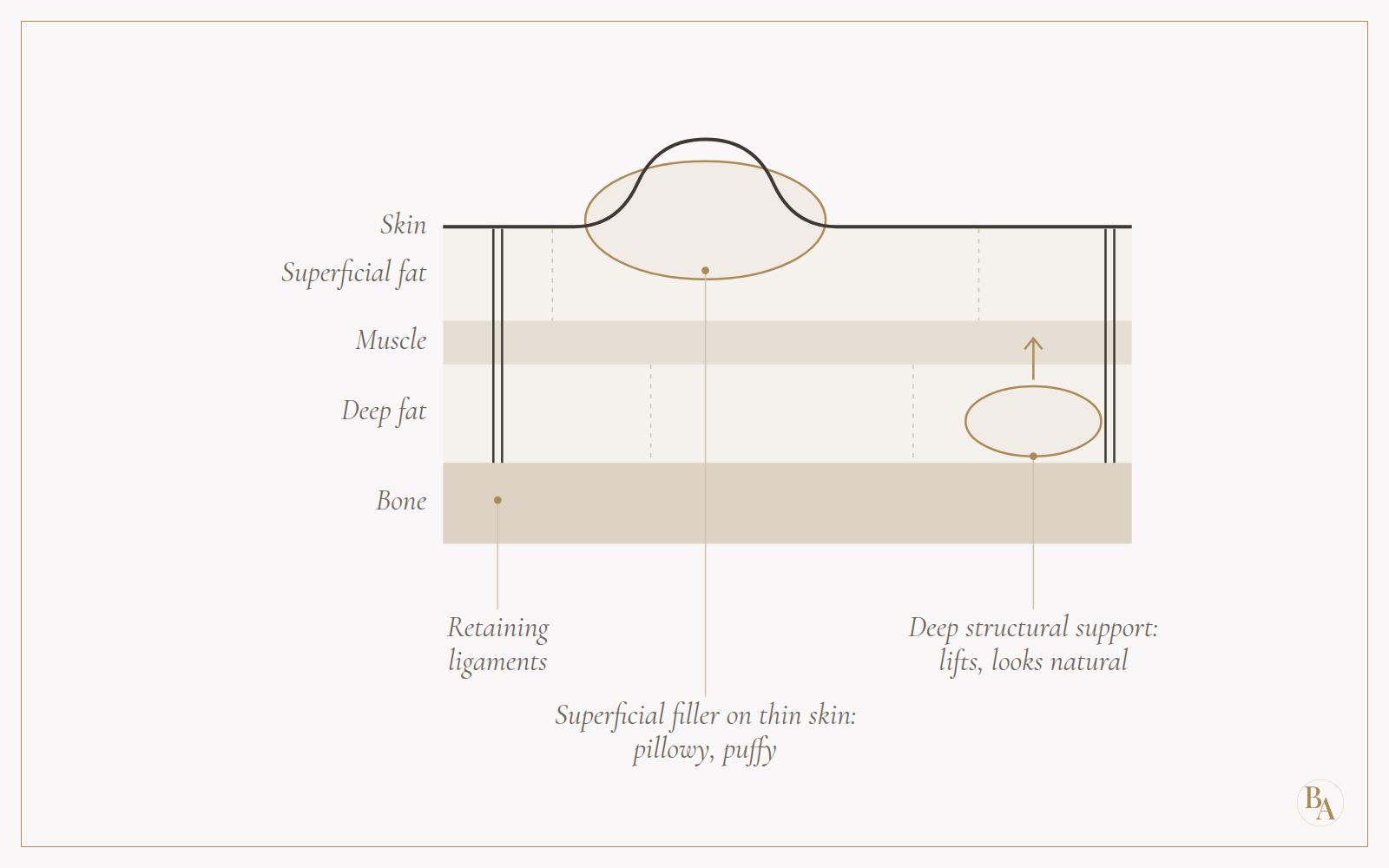
Where filler goes matters as much as how much. Deep, structural placement lifts; superficial filler on thin skin can look puffy.
Four areas patients often ask for first that deserve a facial balancing assessment before filling:
1. Tear trough filler
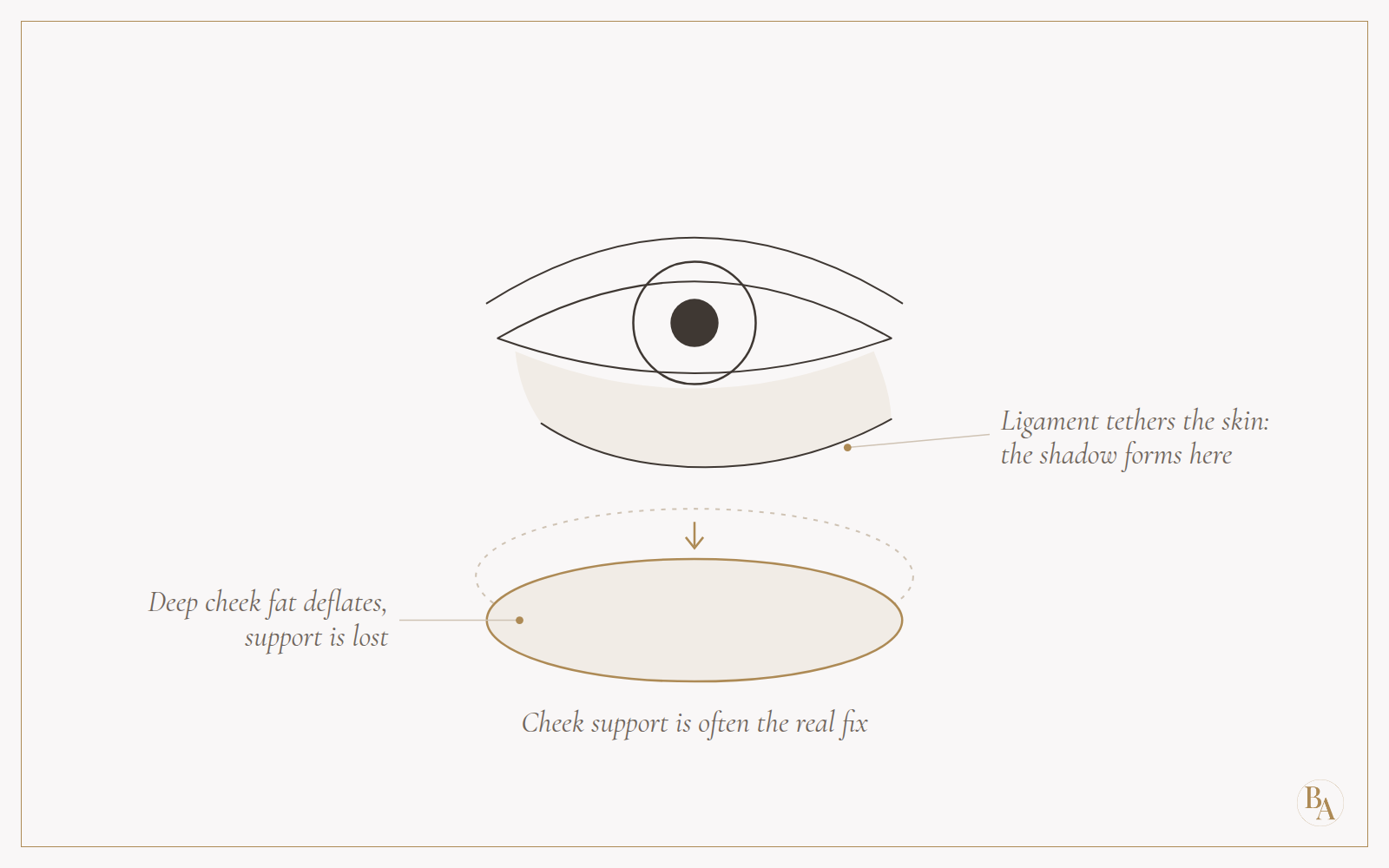
Under-eye hollows have several causes at once. The tear trough ligament tethers the skin along the orbital rim. The deep cheek fat below deflates. The bone around the eye socket recedes. The skin in this area is among the thinnest on the body.
When that hollow comes largely from lost cheek support, filling the under-eye alone often doesn't fully correct it. This is also a delicate area. If filler is placed too superficially, or in someone who isn't a good candidate, it can cause a bluish tint under the skin (the Tyndall effect), puffiness, or swelling that lasts for months. Some under-eye concerns, like prominent fat pads or festoons, aren't well suited to filler at all.
A careful assessment starts with the cheek. Restoring midface support first often softens the under-eye considerably. If the tear trough still needs attention, it's treated conservatively and placed deep, close to the bone.
2. Nasolabial folds
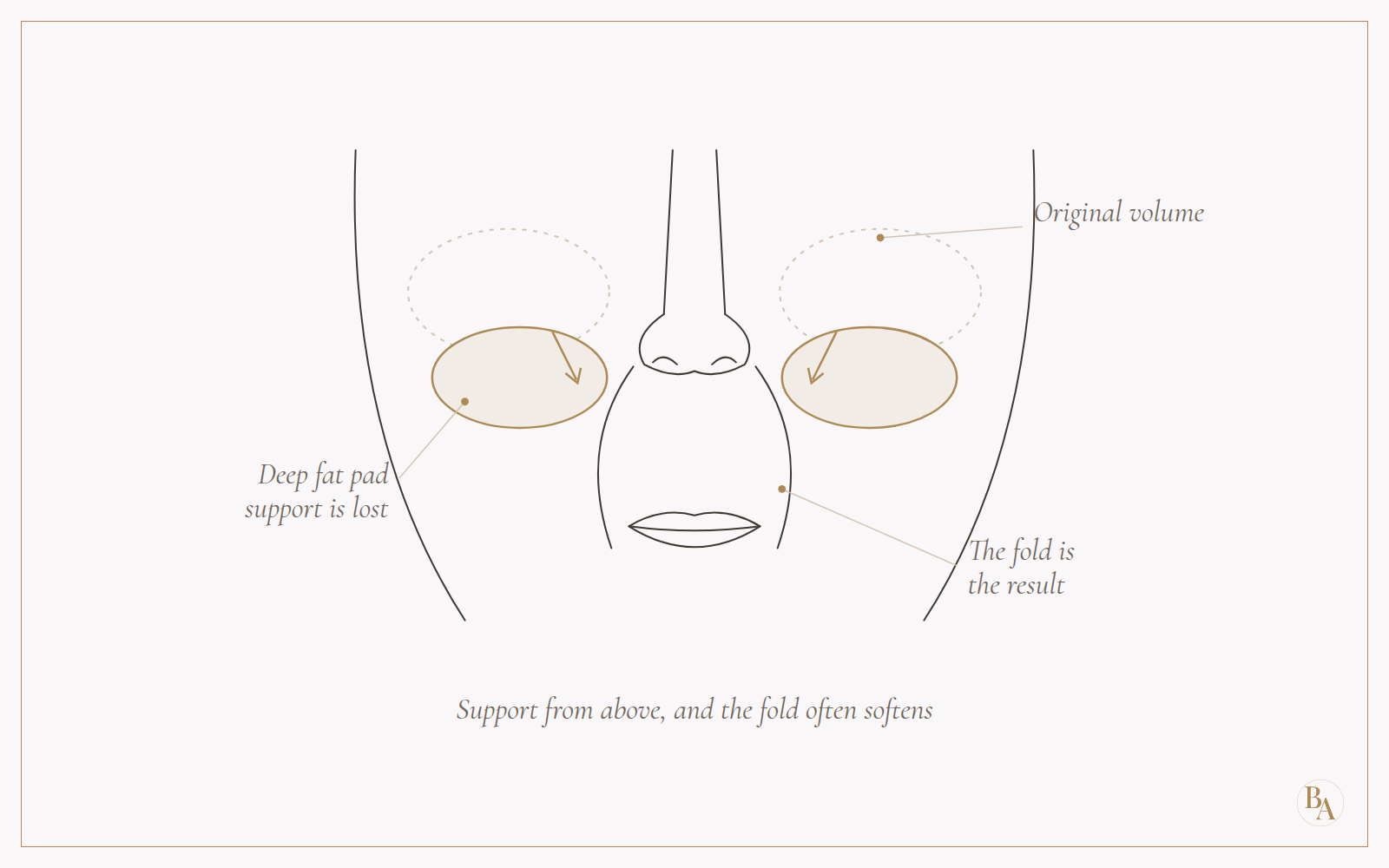
The lines running from the nose to the corners of the mouth are one of the most common reasons people book filler. But the fold is usually the result, not the cause.
As the deep cheek fat loses volume, the midface loses forward projection and the tissue above the fold loses support. The fold sits at the natural boundary between fat compartments, so it deepens as that support fades.
Filling the fold directly is FDA-approved and has its place. On its own, especially in larger amounts, it adds weight to an area that's already heavy and can make the lower midface look full and protruding. Restoring support from above often softens the fold on its own, and anything left can be treated with a lighter touch.
3. Lip filler
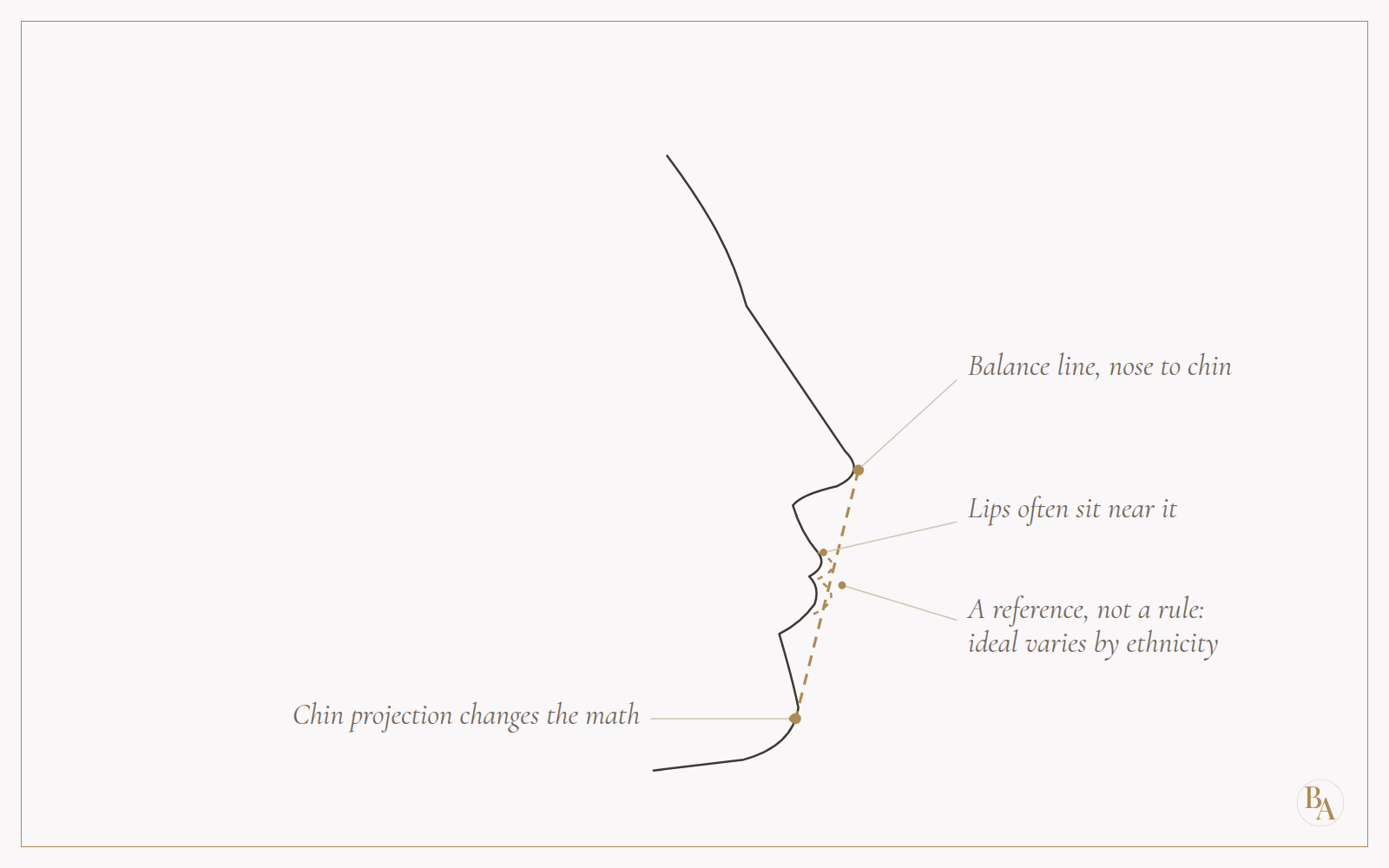
Lips don't exist on their own. How they look depends on the nose, the chin and the midface around them.
One common reference point is a line drawn from the tip of the nose to the chin. Where the lips sit relative to that line varies widely with ethnicity, bone structure and personal features, so it's a reference, not a rule. What it shows well is how much the surrounding structure matters. A recessed chin, for example, can make well-proportioned lips look overly full, and sometimes supporting the chin does more for lower-face balance than adding to the lips.
Without that context, even a subtle syringe can make the lower face look out of proportion. With it, lip treatment can be precise: restoring shape, hydration and definition in a way that fits your face.
4. Jowls and lower face laxity
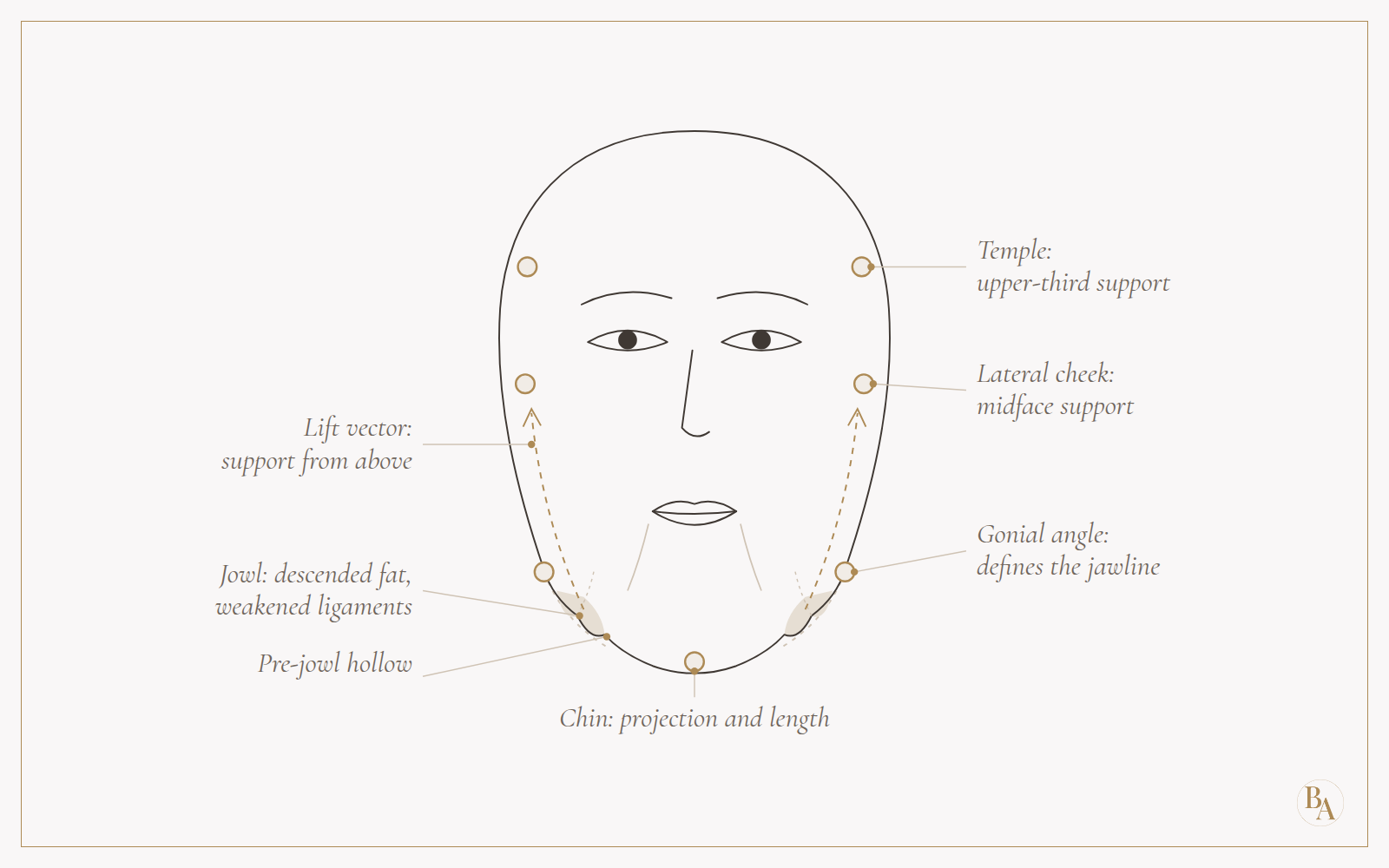
Jowls are one of the clearest examples of a concern that shows up in one place but starts somewhere else. The softening along the jawline comes from several changes at once:
Fat shifts. The fat compartments of the lower face descend and sit heavier along the jaw. The deep cheek fat above them deflates, so the midface no longer supports the tissue below.
Ligaments weaken. The mandibular ligament anchors the skin near the front of the jaw. As the ligaments around it loosen, tissue behind it drops, and the jowl forms beside that fixed point, with a shallow hollow in front of it (the pre-jowl sulcus).
Bone recedes. The jawbone loses volume with age, especially at the chin, just in front of the jowl, and toward the angle of the jaw. The frame that once held the jawline crisp gets smaller.
Skin loses elasticity and can no longer recoil over the changing structure underneath.
Filling the jowl itself adds weight to tissue that has already fallen. The more effective and natural-looking approach works from the top down and from the outside of the face towards the middle.
What is a full facial balancing assessment?
A full facial balancing assessment looks at the whole face before any single area gets treated.
It covers:
Skin quality: thickness, texture and elasticity, and whether the skin is ready to hold volume.
Muscle movement: how your expressions pull on the face, and whether a neuromodulator could rebalance that pull.
Ligament support: where tissue is tethered, and where it has shifted.
Fat compartments, both superficial and deep: where volume has been lost, and where it hasn't.
Bony structure and proportion: how the upper, middle and lower thirds relate to each other.
From there, the plan is sequenced. Restoration starts deep and structural.
Oftentimes, the first step isn't filler at all, but skin quality treatments like microneedling. A personalized, professional-grade skincare regimen is always a part of the treatment plan.
When it comes to procedures, I might recommend starting with a neuromodulator to rebalance muscle pull, or a biostimulator like Sculptra or Radiesse to gradually rebuild collagen so thinner areas are better able to hold volume.
Then, if needed, precise placement of hyaluronic acid filler refines the details.
Foundation first, then refinement. That's how I achieve results end up looking like you, rested and balanced, not "done."
Choosing your injector
Filler is a medical procedure.
The face has a dense network of blood vessels. While complications like vascular occlusion are rare, it is very important to choose a licensed medical provider who is trained in facial anatomy, assesses your whole face, and is prepared to manage complications, including dissolving hyaluronic acid filler, if needed.
Before any treatment, good questions to ask are: "Do you offer a comprehensive intake consultation with a full-face assessment?” and “How do you handle complications?”
Book your consultation
If you're in Winston-Salem or the surrounding area and are considering filler, I'd love to start with a full assessment and a plan built around your face.
By Bridget Alsup, MPAS, PA-C, FMCP-M | Aesthetic Medicine +Wellness | Winston-Salem, NC
This article is for educational purposes and isn't a substitute for an individual medical evaluation. Treatment recommendations depend on your anatomy, health history and goals.